Saturday, 31 January 2015

Scriptures Of The Day: Romans 12:1-21


A Living Sacrifice (ESV)

1. I beseech you therefore, brethren, by the mercies of God, that ye present your bodies a living sacrifice, holy, acceptable unto God, which is your reasonable service.
 2 And be not conformed to this world:but be ye transformed by the renewing of your mind, that ye may prove what is that good, and acceptable, and perfect, will of God.
3 For I say, through the grace given unto me, to every man that is among you, not to think of himself more highly than he ought to think; but to think soberly, according as God hath dealt to every man the measure of faith.
 4 For as we have many members in one body, and all members have not the same office:
5 So we, being many, are one body in Christ, and every one members one of another.
 6 Having then gifts differing according to the grace that is given to us, whether prophecy, let us prophesy according to the proportion of faith;
7 Or ministry, let us wait on our ministering:or he that teacheth, on teaching;
8 Or he that exhorteth, on exhortation:he that giveth, let him do it with simplicity; he that ruleth, with diligence; he that sheweth mercy, with cheerfulness.
9 Let love be without dissimulation. Abhor that which is evil; cleave to that which is good.
10 Be kindly affectioned one to another with brotherly love; in honour preferring one another;
11 Not slothful in business; fervent in spirit; serving the Lord;
12 Rejoicing in hope; patient in tribulation; continuing instant in prayer;
13 Distributing to the necessity of saints; given to hospitality.
14 Bless them which persecute you:bless, and curse not.
15 Rejoice with them that do rejoice, and weep with them that weep.
16 Be of the same mind one toward another. Mind not high things, but condescend to men of low estate. Be not wise in your own conceits.
17 Recompense to no man evil for evil. Provide things honest in the sight of all men.
18 If it be possible, as much as lieth in you, live peaceably with all men.
19 Dearly beloved, avenge not yourselves, but rather give place unto wrath:for it is written, Vengeance is mine; I will repay, saith the Lord.
 20 Therefore if thine enemy hunger, feed him; if he thirst, give him drink:for in so doing thou shalt heap coals of fire on his head.
21 Be not overcome of evil, but overcome evil with good (KJV).

The Church And You: Kathryn Johanna Kuhlman


Kathryn Johanna Kuhlman was born on May 9, 1907, in Concordia, Missouri. Her parents were German and she was one of four children. Her mother was a harsh disciplinarian, who showed little love or affection. On the other hand, she had an extremely close and loving relationship with her father. She would describe, as a small child how, her father would come home from work and she would hang on his leg and cling to him. She often said that her relationship with God the Father was extremely real because of her relationship with her own father.


One Sunday when Kathryn was fourteen (14), she attended church with her mother. It was an evangelistic meeting held in a smàll Methodist church. As she stood singing, she began to shake all over and sob. A weight of conviction came over her, and she realized that she was a sinner in need of salvation and forgiveness. She slipped out from where she was standing, went to the corner of the front pew and sat weeping. At that moment Jesus lifted the weight from her shoulders and entered her heart. She got converted as a result of the meeting and experience she had.
When she was 16 she graduated from high school, which only went to tenth grade in their town. Her older sister Myrtle had married an itinerant evangelist, Everette B. Parrott. They spent their time traveling. In 1924 when Kathryn was about seventeen, she and her older sister Myrtle persuaded their parents that it was God’s will for Kathryn to travel with Myrtle and her husband Everett in their evangelistic tent ministry. She joined them in the summer. She worked with them and when the summer was over she wanted to stay, and the couple agreed. She ended up working with them for five years.Then in 1928, after a meeting in Boise, Idaho, Everett decided to go on to South Dakota, while the women stayed behind and continued to minister there. The offerings collected, however, were not enough to support them and Myrtle soon decided to rejoin her husband. After this happened, a local Boise pastor offered Kathryn a chance to preach at an old pool hall that had been converted into a mission and Kathryn’s ministry began. 

The evangelistic team was made up of four people, Everette, Myrtle, Kathryn, and a pianists named Helen Gulliford. In 1928 Everette missed a meeting in Boise, Idaho. Myrtle and Kathryn preached to cover for Everette. The pastor of the church encouraged Kathryn to step out on her own. Helen agreed to join her. Her first sermon was in a run-down pool hall in Boise, Idaho. The team covered Idaho, Utah, and Colorado for the following five years. In 1933 they moved into Pueblo, Colorado. They set up in an abandoned Montgomery Ward warehouse. They stayed there for six months.

Denver, being a much bigger city, was the next stop. They moved several times but ended up in a paper company's warehouse, which they named the Kuhlman Revival Tabernacle. Then in 1935 they moved once more to an abandoned truck garage they named the Denver Revival Tabernacle. Kathryn was seeing a lot of success in Denver. She began a radio show called "Smiling Through" and invited speakers from all over the country. One of them was Phil Kerr who taught on divine healing.
From the “pool hall” mission, she went on to minister in Pocatello and Twin Falls and eventually ended up in Denver, Colorado. It was there that she founded the Denver Revival Tabernacle in 1935. That same year, Kathryn met Burroughs Waltrip, an extremely handsome Texas evangelist who was eight years her senior. Waltrip was bad news for Kuhlman. He was a charismatic, handsome man several years older than she was. Despite the fact that he was married with two small boys, they soon found themselves attracted to each other. Shortly after his visit to Denver, Waltrip divorced his wife, left his family and moved to Mason City, Iowa, where he began a revival center called Radio Chapel. He then spread the story that his wife had left him. Kathryn and her friend and pianist Helen Gulliford came into town to help him raise funds for his ministry. It was shortly after their arrival that the romance between Burroughs and Kathryn became publicly known.


Burroughs and Kathryn decided to wed. While discussing the matter with some friends, Kathryn had said that she could not “find the will of God in the matter.” These and other friends encouraged her not to go through with the marriage, but Kathryn justified it to herself and others by believing that Waltrip’s wife had left him, not the other way around. On October 18th, 1938, Kathryn secretly married “Mister,” as she liked to call Waltrip, in Mason City. The wedding did not give her new peace about their union, however. After they checked into their hotel that night, Kathryn left and drove over to the hotel where Helen was staying with another friend. She sat with them weeping and admitted that the marriage was a mistake. She knew that the marriage was a bad idea. Her world came crashing down. She gave up her church in Denver, lost some of her closest associates, and the Waltrips' evangelization efforts were dogged by the stories of their history. Her life was a disaster. In 1944, feeling the marriage was the biggest mistake of her life, She decided to get an annulment and she left Waltrip. He eventually divorced her in 1947. The three women left Iowa for Denver in hopes of explaining what had happened to the congregation of Denver Revival Tabernacle. The congregation, however, was so furious with her for the secrecy of the marriage that they drove Kathryn “back into Waltrip’s arms.”
In a moment’s time, the ministry that Kathryn had so diligently built was completely undone. People stopped attending her services. Her ministry was dissolved. Kathryn sold her portion of the Tabernacle. She’d lost everything. Her relationship with the Lord had suffered because she had put a man before her God. But from the moment she made the decision to divorce Waltrip and to surrender herself fully to the Lord, she never wavered again in answering the call that God had placed on her life so many years before.

After Kathryn spent some time preaching in a mining community in Franklin, Pennsylvania, her ministry began to reshape. She traveled throughout the Midwest and the south into West Virginia and the Carolinas. In some places she was quickly accepted. In others, her past resurfaced and the meetings were closed. After an unsuccessful tour of the South, Kathryn was invited to hold a series of meetings in the fifteen hundred seat-auditorium of Gospel Tabernacle back in Franklin. It was there that Kathryn’s ministry was revived and the ills of the past eight years seemed to wash away.

Kuhlman began to hold small evangelistic meetings on her own. In 1946 she was asked to speak in Franklin, Pennsylvania. She was well received and decided to stay in the area. Kuhlman began preaching on radio broadcasts in Oil City, Pennsylvania. These became so popular they were picked up in Pittsburgh, and she was preaching throughout the area. She began to preach about the healing power of God. In 1947 a woman was healed of a tumor while listening to Kuhlman preach. Several Sundays later a man was also healed while she was teaching on the Holy Spirit. She was now convinced of God's healing work. Responses to the broadcasts were so great she soon added a station in Pittsburg. At this time Kathryn was mainly praying for people to receive salvation, but she was also beginning to lay hands on and pray for people who came asking for healing. Though she despised the term “faith healer,” she attended the meetings of such ministers hoping to find out more about this phenomenon of God. Kathryn took a deeper understanding of the workings of the Holy Spirit from each meeting, though many of the things that she witnessed she found to be “unwise performances” and a misuse of the Holy Spirit. In response, she always exhorted people to focus on Jesus and nothing else.
As Kathryn searched the Scriptures about divine healing, she made a life-changing discovery. She read that healing was provided for the believer at the same time as salvation, and it was at this time that she began to better understand the believer’s relationship with the Holy Spirit. Then one night, a woman stood to give a testimony of healing. At Kathryn’s service the night before, without anyone laying hands on her and without Kathryn being aware of it, this woman had been healed of a tumor. She had even gone to her doctor to confirm her healing. Then that next Sunday, a second miracle occurred. A World War I veteran who had been declared legally blind from an industrial accident had eighty-five percent of his vision restored in the permanently impaired eye and perfect eyesight restored to his other eye.

The crowds at the Tabernacle grew. Auditoriums would fill to capacity hours before she was to speak, and thousands were turned away. Countless miracles took place, most without any touch or prayer by Kathryn. She would simply walk the stage and call out healings as they took place where people sat. Sections of those in wheelchairs would walk. In one service, a five-year-old boy who had been crippled from birth walked onto the stage. In another in Philadelphia she laid hands on a man who had received a pacemaker eight months earlier, and the scar from the operation disappeared. Later x-rays confirmed that the pacemaker had as well!


Great healing services continued and her ministry expanded to the neighboring towns. In 1948 Kuhlman held a series of meetings at Carnegie Hall in Pittsburgh. She eventually moved to Pittsburgh in 1950 and a worldwide ministry began to develop and Kathryn’s messages were heard all over the United States via radio and her television broadcast tagged "I Believe in Miracles" and continued to hold meetings at Carnegie Hall until 1971. She grew so popular that she made appearances on The Johnny Carson Show and The Dinah Shore Show among several others. For the last ten years of her life, she held monthly services at the Shrine Auditorium in Los Angeles, where she ministered to countless thousands.

These are probably her best known years. Her style was flamboyant. She would hold her famous miracle services and the auditorium was filled to capacity every time. She was on radio and television shows. She was ordained in 1968 by the Evangelical Church Alliance and was closely associated with the growing Charismatic movement. Hundreds of people were healed in her meetings, and even while listening to her on the radio or television. People she prayed for would often be hit with the power of God and be "slain in the Spirit". Kuhlman never claimed that she was the healer. She always pointed people to Jesus as their healer.

In a time that was suspicious of both women ministers and Pentecostals, Kathryn Kuhlman shook twentieth-century Christianity back to its roots. Believers of all persuasions—Catholic, Baptist, Methodist, Presbyterian, Episcopal, or whatever, it didn’t matter—flocked to her meetings to be healed or filled with the Holy Spirit as they had read about in the book of Acts. Though she called herself “an ordinary person,” the effects of her ministry were anything but ordinary. Kathryn was one of a handful of ministers after World War II who prophetically reintroduced the Holy Spirit and His gifts to the body of Christ on the earth in what has proven the greatest revival of all time: the Charismatic Renewal.
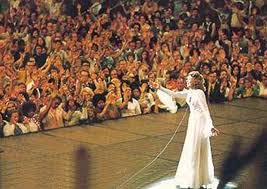
Kuhlman had been diagnosed with a heart problem in 1955. She kept a very busy schedule and overworked herself, especially in the 1970's. She traveled back and forth from Pittsburgh to Los Angeles frequently, as well as taking trips around the world. Her heart was very enlarged and Kuhlman died on February 20, 1976, in Tulsa, following open-heart surgery.

The Church And You Talks about The People And The History Of The Church.

 God's General: Kathryn Johanna Kuhlman 

Kingdom News : "Kirk Franklin Questioned God's Existence"


Popular gospel musician Kirk Franklin is no fan of Christianity's subculture and recently explained how it alienated him as he grew as a Christian and made him question "if God was even real."

Franklin, who discussed his frustration in a blog post on Patheos Tuesday, explained that the Christian subculture made him feel like he didn't belong when he was growing up and encouraged Christians feeling that way to keep loving God because fitting into the subculture isn't what really matters to God.

He opened up about how Christian subculture—rules, dress codes and worship and sermon standards—caused him to question if God even existed. 

"I trusted Christ as my savior at the age of 15. Even then, there was something about the Christian church environment that made me feel like I was left out of some private secret meeting. There had to be a place where everybody was learning how to talk — whether they were greeting someone, responding during the preacher's sermon, or using quotes that seemed to be out of some starter manual for new beginner Christians," he began.

"I didn't always feel like quoting a favorite author from a book in the Bible, and I didn't  understand why everyone at times seemed so perfect and super weirdly happy," Franklin writes. "I sometimes questioned if God was even real. Was His Word even true? I seemed more like a heretic than a part of the 'Christian Club.'" 

He noted that because he couldn't fit in with the subculture he worried many times that he was missing something and it made him question God's existence.

"I sometimes questioned if God was even real. Was His Word even true? I seemed more like a heretic than a part of the 'Christian Club.' Throughout the years of being on a journey, at times I've felt deep levels of fear and confusion, while standing at coffins of little kids killed by random unnecessary acts of violence, while evil people walked away to live another day. I've had days and nights filled with fear about my future," he said.

It was only over time that Franklin realized that fitting in with church culture isn't what's important for a relationship with God.


The answer to life's ultimate question, Franklin determines, isn't how you respond in church or even if you live your life by Christian standards.  

"It's the yanking and pulling and doubting and running and chasing and falling and questioning and crying and dancing and listening that's important," he writes. 

Too often, Franklin writes, people are so focused on being "churchy" that they fail to be "chasers." That is, people get so focused on man's standards and appearances, they end up walking away from Christianity because they find nothing of substance.  

He then warned that it's important for Christians to have a heart that's seeking after God and not simply looking to fit into the Christian subculture.

"The heart of the matter will ALWAYS be the heart of the matter — what matters is your motives and pursuit that burns deep in the place that only God sees. The place you can't hide the real you from," he noted.

"Who you are publicly will only be as strong as who you are privately. You can either be 'churchy' or you can be a 'chaser.' That's what David was in Psalms 42. As the deer was thirsty for water, David was dehydrated for God. He was so thirsty for Him that he made it his life's goal to chase God until that thirst was satisfied. You can go to church seven days a week, dress in all white, and quote every verse in Nahum (which would be kinda weird) but none of that makes you a chaser," said Franklyn.

"Friend, whether or not you believe in Him, He believes in you. And if you don't fit in with the church crowd, don't know any Bible verses, are on your way to jail, just got out of jail, are tatted from your neck to your feet, have your nose pierced, or haven't been to church since your homey got killed, you're OK," he added. "Man is not the standard, God is."
But God's standard supersedes human ones. 


Kingdom Song Of The Day: "King Of Glory".


Third Day - King of Glory Lyrics

Artist: Third Day

Album: Offerings: A Worship Album

Who is this King of Glory
That pursues me with his love
And haunts me with each hearing
Of His softly spoken words

My conscience a reminder
Of forgiveness that I need
Who is this King of Glory
Who offers it to me

Who is this King of angels
O blessed Prince of Peace
Revealing things of Heaven
And all its mysteries

My spirit's ever longing
For His grace in which to stand
Who is this King of glory
Son of God and son of man

His name is Jesus
Precious Jesus
The Lord Almighty
The King of my heart
The King of Glory

Who is this King of Glory
With strength and majesty
And wisdom beyond measure
The gracious King of kings

The Lord of Earth and Heaven
The Creator of all things
He is this King of Glory
He's everything to me

His name is Jesus
Precious Jesus
The Lord Almighty
The King of my heart
The King of Glory

The Lord of Earth and Heaven
The Creator of all things
He is the King of Glory
He's everything to me

His name is Jesus
Precious Jesus
The Lord Almighty
The King of my heart
The King of Glory

His name is Jesus
Precious Jesus
The Lord Almighty
The King of my heart
The King of Glory

The Lord Almighty
The King of my heart
The King of Glory, Glory

The King of my heart
The King of Glory

His name is Jesus

The King of Glory
The King of Glory, Glory

The King of my heart
The King of Glory

His name is Jesus
The Lord Almighty
The King of Glory


"King Of Glory" lyrics are property and copyright of

 Third Day


Friday, 30 January 2015

Scriptures Of The Day: Joshua 1:1-9


Joshua 1:1-9
God Commissions Joshua (ESV)

1 After the death of Moses the servant of the Lord, the Lord said to Joshua the son of Nun, Moses ' assistant,
2 “Moses my servant is dead. Now therefore arise, go over this Jordan, you and all this people, into the land that I am giving to them, to the people of Israel.
 3 Every place that the sole of your foot will tread upon I have given to you, just as I promised to Moses.
4 From the wilderness and this Lebanon as far as the great river, the river Euphrates, all the land of the Hittites to the Great Sea toward the going down of the sun shall be your territory.
 5 No man shall be able to stand before you all the days of your life. Just as I was with Moses, so I will be with you. I will not leave you or forsake you.
 6 Be strong and courageous, for you shall cause this people to inherit the land that I swore to their fathers to give them.
 7 Only be strong and very courageous, being careful to do according to all the law that Moses my servant commanded you. Do not turn from it to the right hand or to the left, that you may have good success wherever you go.
 8 This Book of the Law shall not depart from your mouth, but you shall meditate on it day and night, so that you may be careful to do according to all that is written in it. For then you will make your way prosperous, and then you will have good success.
 9 Have I not commanded you? Be strong and courageous. Do not be frightened, and do not be dismayed, for the Lord your God is with you wherever you go.” (ESV).

The Church And You: John Wesley.


 God's General: John Wesley..
Wesley was born in 1703 into a string Anglican home: his father, Samuel, was priest, and his mother, Susanna, taught religion and morals faithfully to her 19 children.


John Wesley was born June 28, 1703, died Mar. 2, 1791, and was the principal founder of the Methodist movement. His mother was important in his emotional and educational development. John's education continued at Charterhouse School and at Oxford, where he studied at Christ Church and was elected (1726) fellow of Lincoln College. He was ordained in 1728.
         
                           
After a brief absence (1727 - 29) to help his father at Epworth, John returned to Oxford to discover that his brother Charles had founded a Holy Club composed of young men interested in spiritual growth. John quickly became a leading participant of this group, which was dubbed the Methodists. His Oxford days introduced him not only to the rich tradition of classical literature and philosophy but also to spiritual classics like Thomas a Kempis's Imitation of Christ, Jeremy Taylor'sHoly Living and Dying, and William Law's Serious Call.


The Wesley family was made famous by the two brothers, John and Charles, who worked together in the rise of Methodism in the British Isles during the 18th century. They were among the ten children surviving infancy born to Samuel Wesley (1662 - 1735), Anglican rector of Epworth, Lincolnshire, and Susanna Annesley Wesley, daughter of Samuel Annesley, a dissenting minister.


Wesley attended Oxford, proved to be a fine scholar, and was soon ordained into the Anglican ministry. At Oxford, he joined a society (founded by his brother Charles) whose members took vows to lead holy lives, take Communion once a week, pray daily, and visit prisons regularly. In addition, they spent three hours every afternoon studying the Bible and other devotional material.

From this "holy club" (as fellow students mockingly called it), Wesley sailed to Georgia to pastor. His experience proved to be a failure. A woman he courted in Savannah married another man. When he tried to enforce the disciplines of the "holy club" on his church, the congregation rebelled. A bitter Wesley returned to England.


In late 1735, a ship made its way to the New World from England. On board was a young Anglican minister, John Wesley, who had been invited to serve as a pastor to British colonists in Savannah, Georgia. When the weather went sour, the ship found itself in serious trouble. Wesley, also was the chaplain of the vessel, feared for his life.


But he noticed that the group of German Moravians, who were on their way to preach to American Indians, were not afraid at all. In fact, throughout the storm, they sang calmly. When the trip ended, he asked the Moravian leader about his serenity, and the Moravian responded with a question: Did he, Wesley, have faith in Christ? Wesley said he did, but later reflected, "I fear they were vain words."
In fact, Wesley was confused by the experience, but his perplexity was to lead to a period of soul searching and finally to one of the most famous and consequential conversions in church history.


After speaking with another Moravian, Peter Boehler, Wesley concluded that he lacked saving faith. Though he continued to try to be good, he remained frustrated. "I was indeed fighting continually, but not conquering. … I fell and rose, and fell again."

In 1735 both Wesleys accompanied James Oglethorpe to the new colony of Georgia, where John's attempts to apply his then high-church views aroused hostility. Discouraged, he returned (1737) to England; he was rescued from this discouragement by the influence of the Moravian preacher Peter Boehler. At a small religious meeting in Aldersgate Street, London, on May 24, 1738, John Wesley had an experience in which his "heart was strangely warmed." After this spiritual conversion, which centered on the realization of salvation by faith in Christ alone, he devoted his life to evangelism. Beginning in 1739 he established Methodist societies throughout the country. He traveled and preached constantly, especially in the London-Bristol-Newcastle triangle, with frequent forays into Wales, Ireland, and Scotland. He encountered much opposition and persecution, which later subsided.

On May 24, 1738, he had an experience that changed everything. He described the event in his journal
"In the evening, I went very unwillingly to a society in Aldersgate Street, where one was reading Luther's preface to the Epistle to the Romans. About a quarter before nine, while he was describing the change which God works in the heart through faith in Christ, I felt my heart strangely warmed. I felt I did trust in Christ, Christ alone for salvation, and an assurance was given me that he had taken away my sins, even mine, and saved me from the law of sin and death."
Meanwhile, another former member of the "holy club," George Whitefield, was having remarkable success as a preacher, especially in the industrial city of Bristol. Hundreds of working-class poor, oppressed by industrializing England and neglected by the church, were experiencing emotional conversions under his fiery preaching. So many were responding that Whitefield desperately needed help.
Wesley accepted Whitefield's plea hesitantly. He distrusted Whitefield's dramatic style; he questioned the propriety of Whitefield's outdoor preaching (a radical innovation for the day); he felt uncomfortable with the emotional reactions even his own preaching elicited. But the orderly Wesley soon warmed to the new method of ministry.............

With his organizational skills, Wesley quickly became the new leader of the movement. But Whitefield was a firm Calvinist, whereas Wesley couldn't swallow the doctrine of predestination. Furthermore, Wesley argued (against Reformed doctrine) that Christians could enjoy entire sanctification in this life: loving God and their neighbors, meekness and lowliness of heart, abstaining from all appearance of evil, and doing all for the glory of God. In the end, the two preachers parted ways.

Wesley did not intend to found a new denomination, but historical circumstances and his organizational genius conspired against his desire to remain in the Church of England.

Wesley's followers first met in private home "societies." When these societies became too large for members to care for one another, Wesley organized "classes," each with 11 members and a leader. Classes met weekly to pray, read the Bible, discuss their spiritual lives, and to collect money for charity. Men and women met separately, but anyone could become a class leader.

The moral and spiritual fervor of the meetings is expressed in one of Wesley's most famous aphorisms: "Do all the good you can, by all the means you can, in all the ways you can, in all the places you can, at all the times you can, to all the people you can, as long as ever you can."

The movement grew rapidly, as did its critics, who called Wesley and his followers "methodists," a label they wore proudly. It got worse than name calling at times: methodists were frequently met with violence as paid ruffians broke up meetings and threatened Wesley's life.

Though Wesley scheduled his itinerant preaching so it wouldn't disrupt local Anglican services, the bishop of Bristol still objected. Wesley responded, "The world is my parish"—a phrase that later became a slogan of Methodist missionaries. Wesley, in fact, never slowed down, and during his ministry he traveled over 4,000 miles annually, preaching some 40,000 sermons in his lifetime.

A few Anglican priests, such as his hymn-writing brother Charles, joined these Methodists, but the bulk of the preaching burden rested on John. He was eventually forced to employ lay preachers, who were not allowed to serve Communion but merely served to complement the ordained ministry of the Church of England.

Wesley then organized his followers into a "connection," and a number of societies into a "circuit" under the leadership of a "superintendent." Periodic meetings of methodist clergy and lay preachers eventually evolved into the "annual conference," where those who were to serve each circuit were appointed, usually for three-year terms.

In 1787, Wesley was required to register his lay preachers as non-Anglicans. Meanwhile, on the other side of the Atlantic, the American Revolution isolated Yankee methodists from their Anglican connections. To support the American movement, Wesley independently ordained two lay preachers and appointed Thomas Coke as superintendent. With these and other actions, Methodism gradually moved out of the Church of England—though Wesley himself remained an Anglican until his death.

An indication of his organizational genius, we know exactly how many followers Wesley had when he died: 294 preachers, 71,668 British members, 19 missionaries (5 in mission stations), and 43,265 American members with 198 preachers. Today Methodists number about 30 million worldwide.


Late in life Wesley married Mary Vazeille, a widow. He continued throughout his life a regimen of personal discipline and ordered living. He died in 1791 at 88 years, still preaching, still traveling, and still a clergyman of the Church of England. In 1784, however, he had given the Methodist societies a legal constitution, and in the same year he ordained Thomas Coke for ministry in the United States; this action signaled an independent course for Methodism.

The Church And You Talks about The People And The History Of The Church.

 God's General: John Wesley